
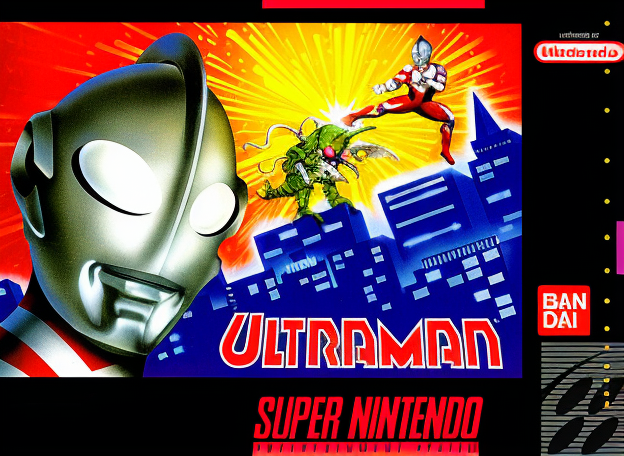
Ultraman (1990)
Ultraman is a licensed action game developed by Bandai for the Super Famicom, released on December 21, 1990. It is based on the legendary Japanese tokusatsu (special effects) superhero franchise created by Eiji Tsuburaya, which first aired in 1966 and has since become a global cultural phenomenon. The game puts players in control of the titular giant of light as he battles a variety of kaiju (giant monsters) threatening Earth. Bandai, the master of anime and tokusatsu licensed games, brought their expertise and passion for the source material, delivering an authentic and action-packed experience for fans of the Ultra Series.
Gameplay and Combat System
Ultraman is a side-scrolling action game where the player controls Ultraman in his human-sized form (as Shin Hayata or other human hosts) through early stages, fighting enemy alien soldiers and monsters in urban environments. The gameplay transitions to giant-sized battles when facing major kaiju bosses, where the perspective shifts to a larger scale and Ultraman can use his full arsenal of signature moves, including the Specium Ray (his iconic energy beam), the Ultra Slash (a crescent-shaped energy disc), and the Ultra Psychic (a telekinetic grab). Players must time their attacks carefully and manage their energy meter, which depletes when using special abilities and regenerates slowly over time.
The game features a variety of stages inspired by classic episodes of the Ultraman TV series, including battles against iconic monsters like Red King, Gomora, Zetton, and the alien invader Baltan. Each boss requires different strategies, with some being vulnerable to physical attacks, others to energy beams, and some requiring the use of specific environmental objects to defeat. The game also includes a power-up system where Ultraman can absorb energy from fallen enemies or light sources, temporarily increasing his strength and speed. The stages are visually detailed, with destructible buildings, explosions, and special effects that mimic the feel of the TV show's action sequences.
Bandai's Tokusatsu Love and Legacy
Ultraman was a commercial success in Japan, capitalizing on the franchise's enduring popularity and Bandai's marketing might. The game received praise for its faithful recreation of Ultraman's moves and the inclusion of multiple playable characters from the franchise, including Ultraman Jack and Ultraman Ace in later levels. Bandai would go on to produce numerous Ultraman games across multiple generations, but this early Super Famicom title remains a nostalgic favorite for many fans. Interesting trivia: the game's sound effects were directly sampled from the TV series, adding an extra layer of authenticity. The game also featured a "monster encyclopedia" that unlocked as players defeated enemies, providing trivia about each kaiju's origin, abilities, and episode appearances, a feature that delighted completionist fans. Ultraman on the SFC is a love letter to the tokusatsu genre and a testament to Bandai's ability to translate beloved properties into engaging interactive experiences.