
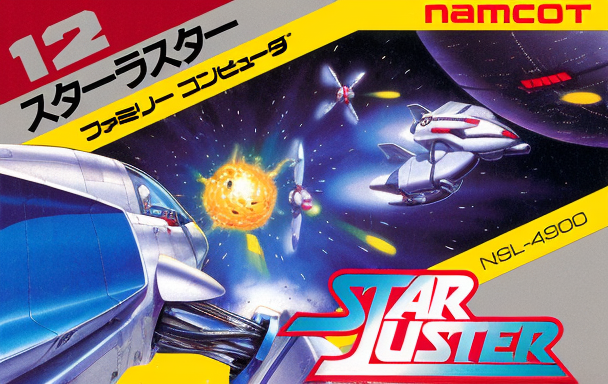
Star Luster: Namco Classic Famicom Title
Star Luster is a pioneering 3D-inspired space combat simulator developed and ported to the Famicom by Namco, blending real-time dogfighting, star system navigation and resource management. Departing from 2D scrolling shooter conventions dominant on the Famicom, Star Luster simulates free-range movement across a star map with first-person cockpit view battles against hostile alien craft. This ambitious simulation structure made Star Luster one of the most technically creative third-party Famicom releases of the mid 1980s and demonstrated Namco’s willingness to experiment with semi-3D gameplay long before pseudo-3D hardware became widespread.
Players command a single starfighter operating within a connected network of star systems. An overhead galactic map displays jump points, friendly bases and enemy presence. Travelling between systems consumes fuel, and limited energy reserves power weapons, shields and warp drives. When encountering enemy squadrons, the perspective shifts to a first-person cockpit view for real-time dogfights. Pilots can rotate left and right, adjust speed and fire forward cannons to eliminate incoming hostile craft.
Friendly space stations scattered across the galaxy enable refuelling, shield repair and ammunition restocking. Participants must carefully plan jump routes to avoid becoming stranded without fuel in uninhabited sectors. Multiple enemy varieties appear during combat: fast light scouts, medium assault craft and heavily armoured capital ships that require sustained fire to destroy. As the campaign progresses, enemy squadron size and attack coordination increase steadily, raising overall operational pressure.
Namco’s Famicom implementation cleverly simulated first-person visuals using scaled sprite layers to create depth illusion within strict 8-bit hardware limits. Galactic map navigation and resource tracking systems operate reliably, and cockpit combat animation was optimised to maintain consistent responsiveness during dogfight sequences. Atmospheric space-themed background music shifts between calm map exploration and tense battle melodies, matching the pace of each gameplay phase.
Strategically, mastery balances long-range resource logistics and short-term combat tactics. Pilots must avoid unnecessary jumps that drain fuel reserves and judge when to divert toward bases for maintenance before engaging large enemy formations. Risk-reward decisions emerge constantly: pushing deeper into contested space yields higher score potential but increases risk of being trapped without repair facilities.
Historically, Star Luster showed that developers could craft convincing space simulation experiences even without dedicated 3D graphics hardware. The resource management plus free combat template influenced numerous later space sim productions on subsequent console generations.
For modern Famicom retro enthusiasts, Star Luster remains a fascinating technical landmark. Its hybrid map-navigation and cockpit combat gameplay cannot be easily compared to standard scrolling shooters on the platform. Collectors regard the cartridge as one of Namco’s most creative original Famicom releases, ideal for players seeking deeper tactical space challenge beyond conventional arcade shooting action.