
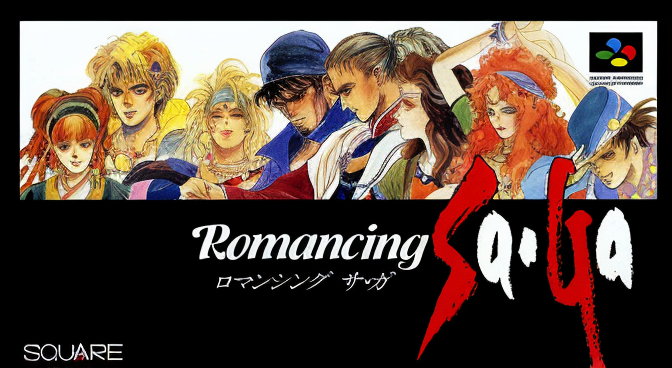
Romancing SaGa (1992)
Romancing SaGa is a groundbreaking role-playing game developed and published by Square for the Super Famicom, released on January 28, 1992. It is the first entry in the Romancing SaGa series, which itself is a successor to the SaGa series on the Game Boy. The game is known for its non-linear structure, multiple playable characters, and its unique "freestyle scenario" system, where players can choose any of eight protagonists, each with their own story, motivations, and starting points, and explore the game's world in any order they choose. Square, renowned for their RPGs, brought their innovative design philosophy to this title, creating a game that was ahead of its time.
Gameplay and Non-Linear Structure
Romancing SaGa features a large, open world with interconnected regions, towns, and dungeons. Players can travel freely between locations, taking on quests, engaging in battles, and recruiting new party members. The game's "freestyle scenario" system allows players to experience the story from different perspectives, with each character offering a unique narrative and set of challenges. The game's combat system is turn-based, with a "formation" system where party members' positions affect their performance in battle. The game also features a "weapon skills" system, where characters can learn new moves by using specific weapons and gaining proficiency.
The game's world is rich with detail, featuring a diverse cast of characters, complex political intrigues, and ancient mysteries to uncover. The game's difficulty is challenging, with enemies scaling in power based on the player's progress, requiring strategic planning and careful resource management. The game's visuals are colorful and detailed, with large, expressive sprites and beautifully rendered backgrounds. The soundtrack, composed by Kenji Ito, features one of the most celebrated soundtracks in gaming history, with memorable themes like the "Opening Theme," "Battle 1," and "Last Battle."
Romancing SaGa was a commercial success in Japan and received critical acclaim for its innovation, depth, and replayability. It established the Romancing SaGa series as a beloved franchise, with several sequels and re-releases on modern platforms. The game's influence can be seen in many later RPGs, particularly those with non-linear narratives and multiple protagonists.