
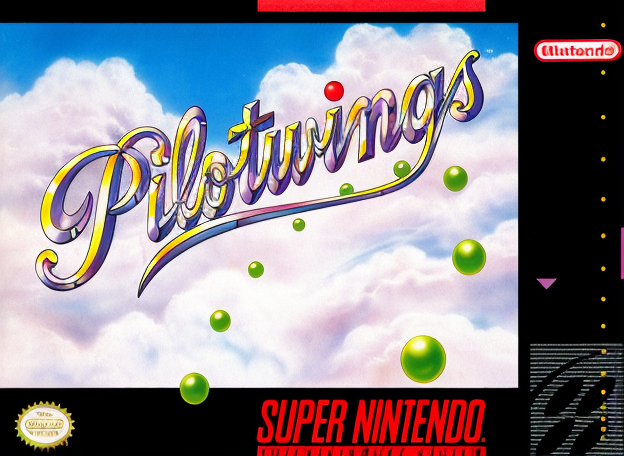
Pilotwings (1990)
Pilotwings is a revolutionary flight simulation game developed and published by Nintendo, released for the Super Famicom on December 21, 1990. It was designed to showcase the SNES's groundbreaking Mode 7 graphics technology, which allowed for smooth scaling and rotation of backgrounds to create a convincing 3D-like flying experience. Unlike traditional arcade flying games, Pilotwings focused on realistic aviation physics and precision-based mission objectives, offering players a tranquil yet challenging simulation that emphasized skill, patience, and spatial awareness over twitch reflexes.
Gameplay and Flight Mechanics
The game puts players in the role of a novice pilot training at the prestigious "Pilotwings" flight academy, located on a series of islands off the coast of a fictional United States. Players must complete a variety of training missions using three distinct aircraft: the light plane (a small propeller-driven aircraft), the hang glider (which relies on wind currents and thermal lifts), and the jetpack (a rocket-powered backpack that offers precise vertical and horizontal control). Each vehicle offers a completely different flight experience: the light plane requires careful speed and altitude management for landing accuracy; the hang glider demands mastery of wind physics to stay airborne and reach distant targets; and the jetpack tests the player's ability to navigate tight obstacle courses with limited fuel.
Mission objectives are varied and creative, including landing on designated runways with pinpoint accuracy, flying through consecutive hoops suspended in mid-air, following a predefined route using a radar compass, and performing speed trials that test the aircraft's maximum velocity. Each mission is graded on a star system based on the player's performance, with higher scores unlocking secret bonus stages and hidden aircraft. The game also features a "Flight School" mode where players can practice individual maneuvers, such as loops, rolls, and stall recoveries, making it an excellent introduction to basic aviation concepts for players of all ages.
Visuals, Sound, and Cultural Impact
Pilotwings was a visual marvel at the time of its release, with the Mode 7 engine creating the illusion of flying over realistic terrain, including mountains, oceans, cities, and forests. The game's color palette was bright and cheerful, evoking a relaxing summer atmosphere that complemented its laid-back gameplay. The soundtrack, composed by Soyo Oka, featured soothing jazz and lounge-inspired melodies that became iconic in their own right, perfectly capturing the game's serene and uplifting tone. Pilotwings was critically acclaimed and sold over 1 million copies worldwide, cementing its status as a launch-window must-have title. It spawned a direct sequel, Pilotwings 64, on the Nintendo 64, which introduced 3D polygonal graphics and a vastly expanded world, and a later installment, Pilotwings Resort, on the Nintendo 3DS. The series is fondly remembered for its innovative use of technology and its ability to offer a peaceful, meditative alternative to the high-octane action games of the era. Trivia: The game's aircraft names and instructor characters were inspired by real-world aviation pioneers, and the island setting was rumored to be based on the Hawaiian archipelago, though Nintendo never officially confirmed this.