
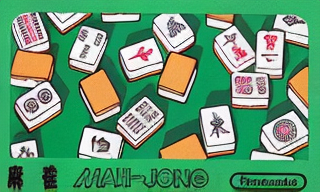
Mahjong: Nintendo Classic Famicom Title
Mahjong is a foundational first-party traditional game title released by Nintendo for the Famicom console, delivering authentic Japanese Riichi Mahjong gameplay tailored for home entertainment. Released in the Famicom’s earliest software wave, this title catered directly to massive domestic demand for digital mahjong simulations, a hugely popular social pastime in Japanese households. Before dedicated electronic mahjong machines became affordable, this Famicom cartridge allowed families and casual players to enjoy standard four-player mahjong matches at home, faithfully replicating official Japanese tournament rules with precise accuracy.
The game strictly adheres to classic Japanese Riichi Mahjong regulations. Each player receives thirteen initial tiles, drawing one tile per turn and discarding one unwanted tile to build valid winning hands. A complete winning hand consists of four melds, formed by sequences, triplets, or quads, paired with a single matching tile pair. Players can claim opponent discards to complete melds, declare Riichi for locked ready hands, utilize Dora bonus tiles for increased scoring, and pursue rare valuable yaku combinations to maximize match points. The Famicom version includes core rules such as dealer rotation, tenpai hands, furiten penalties, and basic house rule options for customized casual matches.
Multiple play modes support both social and solo gameplay experiences. Local multiplayer allows up to four human players to take turns using a single controller, simulating traditional living-room mahjong gatherings. For solo play, three adjustable-difficulty AI opponents fill the remaining seats, with beginner-level AI offering simple, predictable play for newcomers learning tile management and hand building, while advanced AI employs sophisticated tactics including defensive discarding, risk evaluation, and Riichi timing strategy.
The visual interface is designed entirely for clarity and practicality. Tile sprites feature sharp, legible symbols, numbers, and suit markings, allowing instant hand evaluation during fast-paced turns. The screen layout clearly displays discard piles, remaining tile counts, player scores, and wind indicators, with no obstructive decorative elements. Subtle audio cues mark tile draws, discards, declarations, and winning hands, creating a calm focused atmosphere ideal for long strategic matches without overwhelming background music.
Gameplay balances random tile draw luck with substantial skill depth, creating endless replay variation. Expert play involves tracking discarded tiles, estimating remaining stock possibilities, reading opponent behaviors, and managing risk between aggressive high-value hands and safe defensive play. Careless discard choices can instantly concede victory, generating constant tactical tension throughout every round. With dozens of unique yaku combinations and variable match scenarios, no two games ever play identically.
As part of Nintendo’s early Famicom diversification strategy, Mahjong successfully expanded the console’s audience beyond young action-game players. Adult Japanese consumers frequently purchased Famicom systems specifically for traditional tabletop game software, including mahjong, shogi, and gomoku. This broad age-range appeal was instrumental in the Famicom’s dominant market position in 1980s Japan, differentiating it from competitor systems focused solely on youth-oriented arcade action.
For modern retro enthusiasts, Nintendo’s Famicom Mahjong stands as a historically significant early digital Riichi simulator. Its rule accuracy and stable AI behavior hold up exceptionally well compared to later, more graphically flashy mahjong titles. It remains the perfect baseline classic mahjong experience on 8-bit hardware, preserving authentic traditional Japanese gameplay for new generations of retro players and tabletop game fans.