
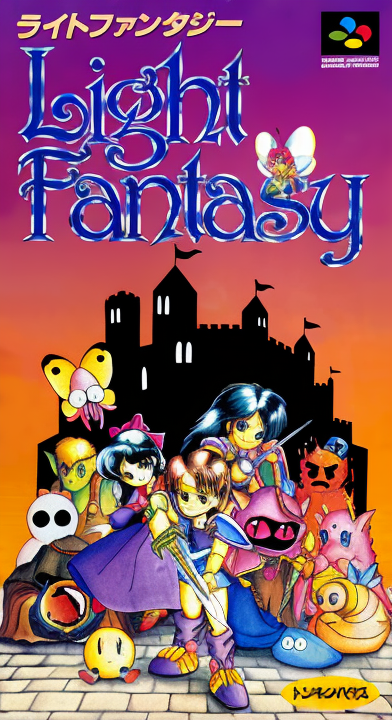
Light Fantasy (1992)
Light Fantasy is a role-playing game developed by Tonkin House and published by Tonkin House for the Super Famicom, released on June 26, 1992. The game is a traditional turn-based RPG set in a fantasy world filled with magic, monsters, and ancient mysteries. Players control a young hero who must journey across the land, gathering allies, solving puzzles, and defeating a great evil threatening the kingdom. Tonkin House, known for their Ys ports and other RPGs, brought their expertise in storytelling and game design to this original title.
Gameplay and Classic RPG Mechanics
Light Fantasy follows the classic RPG formula: players explore a world map, visit towns, enter dungeons, and engage in turn-based combat. The game features a party of up to five characters, each with distinct classes and abilities, including warriors, mages, clerics, and thieves. The combat system is turn-based, with players selecting commands such as "attack," "magic," "defend," and "item" for each character. The game also features a "formation" system, where the arrangement of party members affects their performance in battle, such as boosting defense or increasing attack power.
The game's world is expansive, with multiple continents, towns, and dungeons to explore. The game's narrative is driven by quests and character interactions, with a focus on moral choices that affect the story's outcome. The game's visual style is detailed and colorful, with large character sprites and beautifully rendered backgrounds. The soundtrack, composed by Tonkin House's sound team, features a mix of epic orchestral and synth pieces that enhance the fantasy atmosphere. The game's difficulty is moderate, with a balanced curve that rewards exploration and strategic planning.
Light Fantasy received positive reviews for its solid RPG mechanics and engaging story, becoming a popular title among RPG fans in Japan. It remains a classic for its traditional approach to the genre and its charming presentation.