
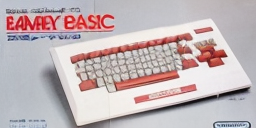
Family Basic: Nintendo Classic Famicom Title
Family Basic represents an extremely unique release within Nintendo’s early Famicom library, functioning as a BASIC programming development environment packaged on cartridge hardware rather than a conventional entertainment video game. Released in 1984 exclusively for the Japanese market, this software transformed the Famicom home console into an affordable home computer system capable of running custom BASIC code written by users. At a time when dedicated personal computers remained prohibitively expensive for many Japanese households, Family Basic offered an accessible entry point for beginners to learn fundamental programming logic, marking Nintendo’s bold experiment positioning the Famicom as a multi-purpose educational and creative device.
The software implements a custom dialect of BASIC tailored for the Famicom’s 8-bit hardware architecture. Users can write simple programs to draw graphics, play sound effects, create interactive mini-games, animate sprites and build basic text-based simulations. Commands support colour manipulation, screen clearing, coordinate plotting, musical note playback, variable storage and conditional logic, covering core programming concepts suitable for novice learners. Program code is entered via a separate external keyboard peripheral sold alongside the cartridge; the standard Famicom controller cannot input text efficiently, making the keyboard accessory mandatory for practical use.
Two primary operating modes are available from the startup menu. Direct mode executes single lines of BASIC code immediately after entry, ideal for testing small commands and experimenting with graphical or audio functions. Program mode allows users to write, edit, save and load multi-line program listings. Saved data can be preserved using an optional cassette tape recorder connected to the Famicom hardware, providing persistent storage for homemade creations before memory backup cartridges became widespread within the Famicom ecosystem. Sample demonstration programs are preloaded within the software to showcase graphical animation, music generation and simple interactive routines, serving as learning templates for new programmers.
Hardware limitations impose clear boundaries on what user-generated programs can achieve. Restricted system RAM limits program length, sprite quantity and simultaneous sound channel usage. Nevertheless, skilled hobbyist programmers created surprisingly sophisticated homemade games, artwork and music compositions using Family Basic throughout the mid and late 1980s. Active hobby communities formed across Japan, sharing program listings via printed computer magazines, allowing users to copy code and expand their own projects, creating an early retro software sharing culture long before internet connectivity became mainstream.
Graphical and audio capabilities mirror standard Famicom specifications, giving user programs access to the console’s native colour palette, sprite hardware and sound processor. All drawing commands work within the standard Famicom screen resolution, ensuring consistent visual output across all compatible hardware. The user interface employs Japanese text menus and command documentation, meaning the cartridge received no official Western localisation and remains a Japan-exclusive product to this day.
Contextually, Family Basic demonstrates Nintendo’s broad vision for the Famicom platform. Instead of treating the console purely as a toy for playing pre-made games, the company explored ways to enable user creativity and education. This strategy competed against inexpensive home computer systems targeting students and hobbyists, attempting to capture consumer demand for introductory programming hardware. While the product never achieved massive mainstream sales compared to Nintendo’s entertainment cartridges, it holds immense historical significance as proof of the Famicom’s flexible hardware potential.
For contemporary retro computing and Famicom collectors, Family Basic stands as a rare curiosity. Complete working setups including cartridge, external keyboard and cassette storage equipment command premium value within enthusiast circles. Hobbyists continue to study preserved homemade programs created during the 1980s, documenting the creative boundaries early programmers could reach within constrained 8-bit hardware environments. As Nintendo’s only official programming environment for the original Famicom, Family Basic occupies an irreplaceable niche within the expansive history of the console’s software ecosystem.